
American Express · Multidisciplinary UX organization and consumer product design · 2012–2016
The question
What would it take for an in-house design team to earn responsibility for the core consumer app?
The work
I joined U.S. Products and Services as its first full-time design hire at a time when product teams relied heavily on agencies. An agency would receive a brief and return weeks later with a proposed solution. Without a continuous connection among Product, Design, and Engineering, the work could be stylistically uneven and difficult to build into a coherent product.
I built an internal design organization from zero to more than 20 people across human factors engineering and creative work. We covered information architecture, UX, UI, and visual design across iOS, Android, and web journeys. A separate research organization partnered with us; it was not part of the team I hired.
We established design principles, prototyping and review practices, reusable patterns, and a more direct working relationship with Product and Engineering. Engineers became participants in product and experience decisions, bringing implementation knowledge into the design process rather than only receiving finished agency files.
The judgment
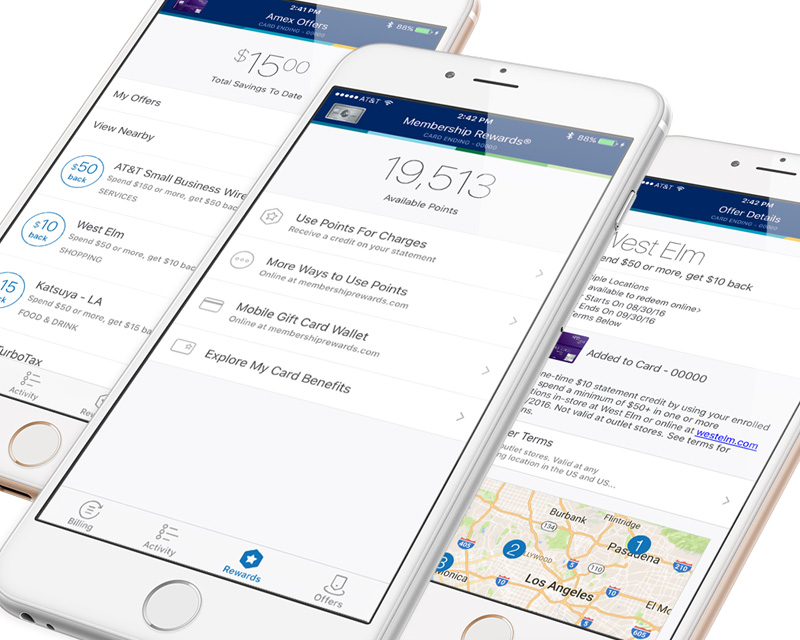
An early opportunity was Membership Rewards. Points could accumulate without an appealing or easy way to use them, especially on mobile. We tested a simple proposition: let a cardmember use points to remove an eligible transaction from a statement. On iOS, a swipe revealed the action in the context of the transaction itself.
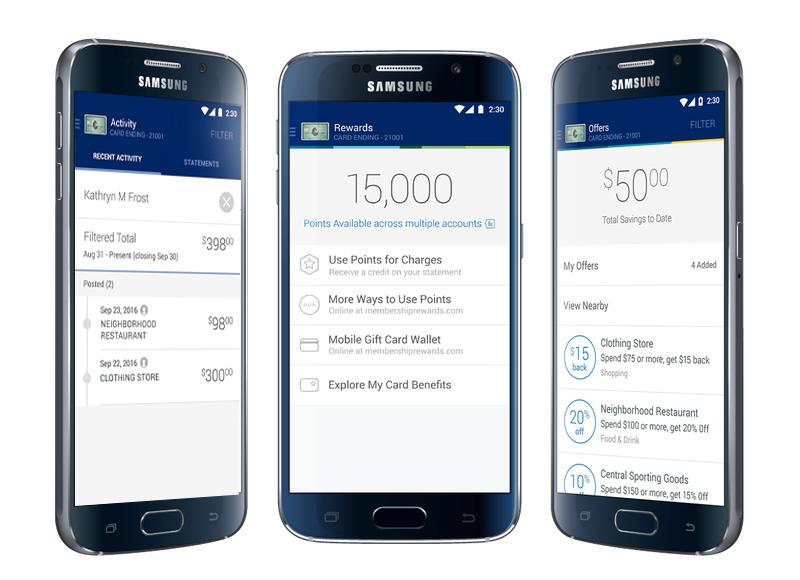
The idea tested strongly with representative users and was brought into the core U.S. app. Its reception helped the team earn the mandate to redesign the entire consumer mobile experience. We treated iOS and Android as distinct front ends that should behave as users of each platform expected, while working with Engineering on the shared underlying product capabilities.
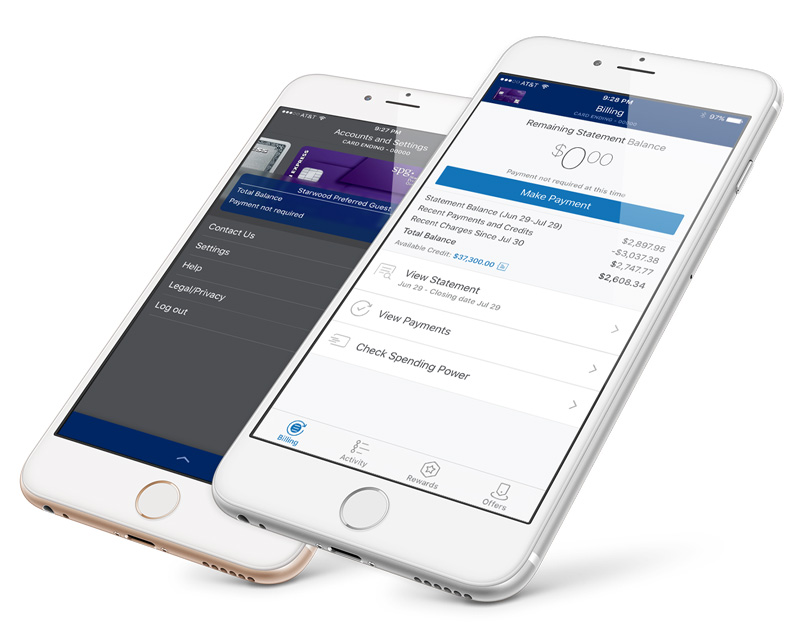
That broader work retained the rewards interaction, added offers where they had been absent, and reworked the bill view. We tested ways to explain balances, amounts due, and payment choices that had previously appeared as a difficult field of numbers.
The core redesign was a larger change in how the app worked and how it could be maintained. The previous experience was brittle for Engineering and used interactions that did not feel native to either major mobile platform. We worked from shared product capabilities while giving iOS and Android their own interface and interaction patterns. Simpler navigation made the main jobs easier to locate; platform conventions made those jobs easier to carry out without learning an idiosyncratic Amex interface.
The billing screen became a clearer account of what a cardmember owed, when payment was due, and which payment choices were available. We explored and tested different breakdowns of the financial information so the screen could explain the bill rather than present a sea of numbers. A distinct activity view gave transactions a more legible place in the app, with the rewards action available in the context of an eligible charge.
Offers became a usable part of the core experience, including on Android, where they had previously been absent. We designed a clearer path through finding an offer, understanding its value, and redeeming it. Together, Billing, Activity, Membership Rewards, and Offers became recurring reasons to open the app. This work joined product structure, interaction design, content clarity, visual design, and Engineering decisions across two native experiences; it was the central product mandate the earlier rewards concept had helped us earn.
The result
The in-house organization retained its mandate. The team delivered the rewards interaction and redesigned native apps with Product, Engineering, and research partners. Internal reporting showed the mobile user base rising from 2.2 million to more than 4 million in the first year after the redesign. More than five billion Membership Rewards points were redeemed through the new experience.
In that first-year period, internal reporting also showed a 93% increase in daily active users, a 70% increase in monthly active users, and a 109% increase in logins. Billing and activity views, offer redemptions, and Membership Rewards actions also increased. These feature-level movements show that cardmembers were using the redesigned core journeys, although I do not have individual feature percentages to publish.
Those numbers describe the wider product effort and period, not the isolated effect of design. The team's lasting responsibility for the core app is also a consequential organizational result.
Contribution and result
| Field | Account |
|---|---|
| My role | Vice President, Consumer Products and Services User Experience Design. |
| My contribution | Built and led the in-house design team; established methods and collaboration; led design direction for the rewards concept and core app. |
| Observable consequence | Rewards interaction and redesigned apps shipped; the team assumed and retained the core app mandate. |
| Core app decisions | Reworked Billing and Activity, introduced a coherent Offers experience, retained contextual rewards use, simplified navigation, and adapted interaction patterns to iOS and Android. |
| Engagement signals | In the first year: mobile users rose from 2.2 million to more than 4 million; daily active users increased 93%, monthly active users 70%, and logins 109%. Internal reporting also showed more billing and activity views, offer redemptions, and rewards actions. |
| Basis | Firsthand leadership account and internal product reporting; public app material can illustrate the delivered work. |
| Boundary | User growth, engagement, and points redeemed were measured across a shared product, engineering, research, and marketing effort. The feature-level increases are directional here; this account does not publish their individual deltas. |
What I carry forward
A design organization earns influence when its methods improve real decisions and its work reaches the product people use.
Project descriptions focus on my role and the contribution I can describe publicly. Confidential materials are omitted. Illustrations identified as reconstructions explain an idea; they are not original project deliverables.